
Category Archives: Uncategorized

Financial Integrity: Passion and Process

The following is from one of my students at Colorado Christian University currently enrolled in a Fiscal Management for Nonprofit Organizations Class. Mariah (Riah) Hodges lives in Topeka, Kansas and volunteers at the Topeka Rescue Mission and Global Missions Ministries.

Bible Verse for Today:

Thanks be to God, who put into the heart of Titus the same concern I have for you. For Titus not only welcomed our appeal, but he is coming to you with much enthusiasm and on his own initiative. And we are sending along with him the brother who is praised by all the churches for his service to the gospel. What is more, he was chosen by the churches to accompany us as we carry the offering, which we administer in order to honor the Lord himself and to show our eagerness to help.We want to avoid any criticism of the way we administer this liberal gift. For we are taking pains to do what is right, not only in the eyes of the Lord but also in the eyes of man. (2 Corinthians 8:16-21 NIV)

Understanding the background of this passage helped my understanding and ability to gain some insights. Paul was concerned about the impact of a famine in Jerusalem and the suffering it was causing the Christians. He had received offerings from the Macedonians and was now sending Titus and two other brothers ahead to Corinth to receive their offerings. Paul would join up with Titus and his companions in Corinth. The entourage would then travel to Jerusalem to distribute the offerings to the suffering Christians. 

In 2 Corinthians 8:16-21, there are several points that stand out: 

1. Accountability requires the right heart.

Paul thanked God for giving Titus a heart of concern for those who were suffering, making him like-minded to Paul and the others. Titus took initiative, he was happy to help!

These verses remind us that God knits hearts together for a common cause. God placed Titus in Corinth and placed in him a heart for the people. As a result, he was more than willing to return to Jerusalem and help distribute the gifts to those who were in need. He did not complain. This was more than just cooperation. Titus was honored to serve the Lord this way and saw this more than just an “assignment” but as an undertaking that he “owned” or embraced. This was more than mission alignment, it was heart alignment.

We too need the right heart and attitude when it comes to receiving and distributing the Lord’s gifts. How do we view what is entrusted to us?

A few weeks ago, I was on a zoom call with Pastor Jim Walters of Servants of Christ International. Pastor Jim stated in this call “everything we have been given belongs to God.” He then made a comment that I enjoyed and changed my perspective on things. He said, even when his car needs repaired his thought isn’t “my car needs repaired, what am I going to do?!” Instead it’s “God, Your car needs repaired, what are You going to do?” I mention this little story because in any organization intended to help the needy, we have to recognize that the donations and gifts being given are not ours, but God’s, and we were simply trusted to distribute them accordingly and to be happy doing the Lord’s work that way! 

2.The men taking the gift were trusted.      

“and we are sending with him a brother who is praised by all the churches for his service to the gospel. What is more, he was chosen by the churches to accompany us as we carry the offering, which we administer in order to honor the Lord Himself and to show our eagerness to help” (2 Corinthians 8:18-19 NIV)

This brother is unknown to us but known by Paul and the Church. His desire was to honor God through his service. This brother was “chosen by the church” which indicates he had a good reputation and could be trusted by the Corinthians. His character paved the way for greater service and responsibility. Faithfulness leads to expanded opportunity to serve. That can be a great honor and reward.

We see Paul and his companions express the proper attitude and motivation when he says, we administer (this offering) “to honor the Lord himself and to show our eagerness to help.”

 In an organization that is intended to distribute gifts to those in need, donor motivation and trust are of great significance to succeed. Donors want to know that the organization can manage and distribute finances in a way that shows integrity, accountability and careful consideration. When they see we are capable of doing so, they begin to trust the organization and its abilities to honor God and serve those who are in need. What an honor it is to be able to serve the Lord and His children! 

3These verses remind us “there is safety in numbers”

“We want to avoid any criticism of the way we administer this liberal gift. For we are taking pains to do what is right, not only in the eyes of the Lord, but also in the eyes of man(2 Corinthians 8:20-21 NIV)

Titus, and the unnamed brothers (v.22) were entrusted with this task of collecting the offering and then joining with Paul to travel to Jerusalem to distribute it to those in need. There was not only the risk of traveling great distances, but the need for accountability as well. They approached their responsibility in a manner to make it difficult for people to place blame and claim they are being dishonest with the offering and did so in a way to avoid any “appearance of evil.” 

Paul says, “we are taking pains to do what is right.” Doing what is right might take longer, it might be more difficult, it will take more effort. But when it come to being faithful stewards it is what the Lord desires and deserves.
Evaluating our Attachment to God

Bible Verse for today: “…He raised up David to be their king, of whom he testified and said, ‘I have found in David the son of Jesse man after my heart, who will do all my will.”

Acts 13:22 ESV) “Abraham believed God, and it was counted to him as righteousness”—and he was called friend of God.”  (James 2:23 ESV)

Our relationship with God can serve as the basis for healthy relationships with others. In our zoom class today on “The Bible and Mental Health” Ron Hanson shared about “Attachment Bonds: How They Shape Relationships.”

Psychologist John Bowlby says, “the concept of attachment is a lasting psychological connectedness between human beings.” If we apply that spiritually we could say, “attachment is a lasting spiritual connectedness between an individual and God.”

We can be thankful as New Testament believers for the relationship with God through Jesus Christ that is afforded to us by forgiveness and grace offered in the cross. That is why when I read of the lives of Old Testament leaders and especially David’s relationship with the Lord in the Psalms it is even more striking.

There are four distinguishing characteristics of attachment physiologically and they have an application to our spiritual lives.

1 – Proximity Maintenance – The desire to be near the people we are attached to. Application: Do you value and cultivate the Lord’s presence in your life?

 “…in your presence there is fullness of joy; at your right hand are pleasures forevermore.” Psalm 16:11 “…Set me in your presence forever.” Psalm 41:12 “…The upright shall dwell in your presence.” Psalm 140:13

2 – Safe Haven – Returning to the attachment figure for comfort and safety in the face of fear or threat. Application: Is the Lord a source of comfort, safety and security for your life?

“The LORD is my rock, my fortress and my deliverer; my God is my rock, in whom I take refuge, my shield and the horn of my salvation, my stronghold.” Psalm 18:2 (NIV) ”…I call as my heart grows faint; lead me to the rock that is higher than I. Psalm 61:2 (NVI)

3 – Secure Base – The attachment figure acts as stability from which a person ventures into activities of daily living. Application: Take the Lord with you each day every day.

“For it is you who light my lamp; the LORD my God lightens my darkness. For by you I can run against a troop, and by my God I can leap over a wall.” Psalm 18:28,29 (NIV)

When Moses was preparing to lead God’s people to the promised land, the Lord responded to his plea for help with these words,  ”The Lord replied, “My Presence will go with you, and I will give you rest.” Moses’ response back to the Lord was, “If your Presence does not go with us, do not send us up from here.” (Exodus 33:14,15 NIV)

Remember how the Children of Israel in the wilderness were not to move unless they were following the cloud? That is a good reminder of how important it is for us to trust the Lore for His daily guidance, protection and provision for our life.

4 – Separation Distress – Anxiety that occurs in the absence of the attachment figure. Application: Are we aware of the decisions and actions that bring separation between us and the Lord? While we can be confident of the Lord’s love, we must desire to always be close to Him. We see King David’s prayer of repentance included this plea:

“Do not cast me from your presence   or take your Holy Spirit from me.” Psalm 51:11 NIV

“Yet I am always with you; you hold me by my right hand. You guide me with your counsel, and afterward you will take me into glory. Whom have I in heaven but you?  And earth has nothing I desire besides you. My flesh and my heart may fail, but God is the strength of my heart and my portion forever.” Psalm 73:23-26

I encourage you to look for other verses and the application of these concepts for your life. When we are secure in our relationship with the Lord it will serve as the basis for our healthy relationships with others. We won’t be looking for people to meet the needs that God alone can meet on a consistent basis.

Courage Through Confidence in God’s Care

BIBLE VERSE FOR TODAY: Do not be afraid of those who kill the body but cannot kill the soul. Rather, be afraid of the One who can destroy both soul and body in hell. Are not two sparrows sold for a penny? Yet not one of them will fall to the ground outside your Father’s care. And even the very hairs of your head are all numbered. So, don’t be afraid; you are worth more than many sparrows.   Matthew 10:28-31 NIV

I was inspired by this passage of scripture during a zoom class this morning (Thank you Ron Hanson) along with the Memorial Day Holiday. Memorial Day is a time to reflect on those soldiers whom one day put on their uniforms, but never took them off. They demonstrated “valor” even if they were not recognized for that quality. Valor is “great courage in the face of danger, especially battle.”

Theologian G.K. Chesterton observes, “Courage is almost a contradiction in terms. It means a strong desire to live taking the form of a readiness to die.” Every soldier who dawns a uniform in a time of war demonstrates courage. They desire to live, but they realize that cause for which they fight may cost them their lives.

In Matthew 10, Jesus is calling His disciples to be men of courage, men of valor. He tells them, “I am sending you out like sheep among wolves…will be handed over to the local councils and be flogged in the synagogues. On my account, you will be brought before governors and kings as witnesses to them and to the Gentiles. But when they arrest you don’t worry about what to say…” (v. 16-19) You will be hated by everyone because of me…” (v. 22)

Because of the sacrifice of those who have gone before, we are free from the degree of persecution in our country that Jesus spoke about to His disciples. Yet there are other sources of fear, some subtle, some of great significance.

How can we have courage in the face of danger? We need to fear God and not people Despite all the disciples would face Jesus tells them, “Don’t be afraid of those who can kill the body but cannot kill the soul.” Remember that it was the desire to accommodate their lives to those around that allowed those of the Church of Laodicea to become lukewarm. What we think about, our focus determines our peace. Our call is to focus on the Lord and His Word. We are to love the Lord with all of our heart, soul, mind, and strength. We must love the Lord above all others and above all else.

How does Jesus communicate God’s care in the face of danger? He draws our focus to sparrows. Sparrows not eagles. Two sparrows are sold for a penny, but the Lord sees them when they fall.

We pay attention and watch over that which we value. Have you been keeping an eye on your investments lately? We don’t pay attention to that which doesn’t matter. Jesus reminds us that in God’s economy that which is of low value to people is highly prized by God. That is why fishermen, tax collectors, and those the world overlooked or despised were chosen by Jesus to be world changers.

Finally, Jesus reassures His disciples that small things matter to God. He even knows that number of hairs on our heads! If God cares about sparrows and hair, we can have confidence that He cares for us! “…you are worth more than many sparrows.” (Matt. 10:31 NIV)

In our life as Christ-followers we can have courage; we don’t need to be afraid. In facing the anxiety of a pandemic, we can have courage; we don’t need to be afraid. God cares for us. “His eye is on the sparrow and I know He watches me.”

Courage. Desiring to live, readiness to die. When Christ is at the center we can live with courage and confidence in God’s care and the eternal destiny that gives peace and dispels worry and fear.


Sleeping During the Storm

BIBLE VERSE FOR TODAY…. Whoever dwells in the shelter of the Most High will rest in the shadow of the Almighty. I will say of the Lord, “He is my refuge and my fortress, my God, in whom I trust.” Surely he will save you from… and from the deadly pestilence. You will not fear the terror of night…nor the pestilence that stalks in the darkness, nor the plague that destroys at midday.”  Psalm 91:1-6 (selected)

I am beginning with this familiar Psalm, but I want to place it in the context of a New Testament event. Mark 4:36-41 is the account of the disciples encountering storm on the sea, while Jesus is sleeping in the stern of the boat.

Today during the noon prayer time Pastor Bob Seale did a great job in addressing the dialogue that took place between the disciples and Jesus. (You might want to check it out on the Timberline Church Facebook page.)

But as Debbie and I have processed this event, I found myself zooming out. I usually look at this story from the disciples’ viewpoint. But I began to ponder the viewpoint of Jesus. Jesus was sleeping in a storm! It had to have been loud, chaotic, and disruptive. This was far from a peaceful setting the would seem fitting for sleep. Jesus was human. He had hunger, thirst, fatigue. He was tempted just like we are. He was vulnerable to physical harm. Yet he was sleeping! Why?!

I began to consider how we tend to deal with situations that arise. We tend to do so based on our experience and context. If we are in familiar territory, we have a sense of confidence in what needs to be done. “I have been here before, I know what to do.” Many of the disciples were fishermen. They were men of the sea and had faced storms in the past. Their response was to take control and to do what they had done…what they knew to do. But this storm was different, it was unprecedented. (Have you heard that word lately?) Soon their confidence turned into fear and panic.

Jesus responded to the storm out of his context. Was it the context of knowing that he was with men of great experience on the sea? The experience of others can certainly be of great comfort when we are in a situation that is new to us but not to those with us in that situation.

But Jesus’ context was not His confidence in the disciples, but His relationship with His Father. He was committed to the Father’s will. He kept His relationship intimate and consistent. He was confident of His future and as a result, was confident of the Father’s care. His faith was fixed on the Father’s care.

When the disciples’ exhausted their ability fear set in. And fear is the enemy of faith. [Jesus] said to his disciples, “Why are you so afraid? Do you still have no faith?” In the context of Psalm 91, we can observe when the Lord is our refuge, we won’t’ be overcome by fear.

I thought of words of the Gaither song, “Till the storm passes over, till the thunder sounds no more, Till the clouds roll forever from the sky, Hold me fast, let me stand in the hollow of Thy hand Keep me safe till the storm passes by.”

Another old song contains the words, So let the storms rage high, the dark clouds rise, they don’t worry me
for I’m sheltered safe within the arms of God. He walks with me and naught of earth shall harm me. For I’m sheltered in the arms of God.

We need to remember to keep our faith in God in the center of our context. When we do that we can find peace and rest in the midst of the storm.


Choosing Our Response

We find ourselves facing the most challenging time in most of our lifetimes. These are times that reveal our source of trust and call for insight and hope. I was emailing the men of Timberline Church some thoughts that came to me as I read one of my morning devotions and thought I would share it with all of you.

Bible Verse for Today….Do not boast about tomorrow, for you do not know what a day may bring. Proverbs 27:1

Just when I have been planning my spring garden, we get a six-inch snow. This just shows that regardless of our plans and timelines we have to adjust to the realities that life brings.

That pretty much describes what has been happening in our lives with COVID-19 and the drastic interruptions of life and business in the midst of this unprecedented health crisis

Perspective is important for our lives. It is one thing to be “staying at home” it is another to be home and sick with Coronavirus. It is another to be in the hospital. It is another to be in an ICU room.

When I was on life support during my health crisis six years ago, I can remember having thoughts like, “I’m glad I don’t have cancer.!”  While my traumatic brain injury may have influenced my thought processes about the real danger I was in, it also has reminded me about perspective.

Perspective has to do with how we view our present circumstances and how we view our lives in the context of time. Often when a crisis is over and time passes the pain we are experiencing now tends to fade into the timeline of our lives.

So as we are in the current time we need to monitor our perspective and to have the wisdom to know how we should respond in this season. Clint Hurdle’s daily email devotion contained the following:

  • Some people need more focus. Others need to broaden their perspective.
  • Some people need to try harder. Others need to stress less.
  • Some people need to care more. Others need to let it go.
  • The secret is you are both people. The key is to know which one you are in this moment.

When I read this, I was reminded of Ecclesiastes 3

For everything there is a season and a time for every matter under heaven:

a time to be born, and a time to die;
a time to plant, and a time to pluck up what is planted;
a time to kill, and a time to heal;
a time to break down, and a time to build up;
a time to weep, and a time to laugh;
a time to mourn, and a time to dance;
a time to cast away stones, and a time to gather stones together;
a time to embrace, and a time to refrain from embracing;
a time to seek, and a time to lose;
a time to keep, and a time to cast away;
a time to tear, and a time to sew;
a time to keep silence, and a time to speak;
a time to love, and a time to hate;
a time for war, and a time for peace.

As I thought about this in relation to the words from the devotional I read, it made me think that life is not just reacting to what happens but making a choice.

There are many things about life that we don’t have control over. But we must always choose how we respond.

As I look at the list of contrasts in Ecclesiastes 3 many of them are choices I need to make. When is it time to speak up? When is it time to be quiet? When is it time to breakdown? When is it time to build?

This shows us that we need prayerful guidance on how to face the circumstances and challenges of life. We need to keep from just reacting and to respond with insight and wisdom that comes from the Lord. So my prayer is that you will walk in wisdom and choose the right response for the circumstance and season in which you find yourself.


Peace in a Time of Panic

 Bible Verse for Today: “Do not be anxious about anything, but in everything by prayer and supplication with thanksgiving let your requests be made known to God.  And the peace of God, which surpasses all understanding, will guard your hearts and your minds in Christ Jesus.” (Philippians 4:6,7 ESV)

These verses are familiar to many but serve as an important guide in this day as communities, states, our nation, and the world respond to the COVID-19 pandemic. This week updates took place it seemed by the hour, not just the day. News reports, press conferences, the stock market tumbling, the cancelation of meetings have left people feeling out of control, confused and in a state of panic.

Social media has shown pictures of lines outside of Costco stores, some stores have closed because of empty shelves and hoarding is making Black Friday look like a normal shopping day.

Paul Marsden, a consumer psychologist at the University of the Arts London, says the reason for a shopping panic can be found in the psychology of “retail therapy” — where we buy to manage our emotional state.

“It’s about ‘taking back control’ in a world where you feel out of control,” he said. “More generally, panic buying can be understood as playing to our three fundamental psychological needs.” Another psychologist explains the run on toilet paper as being related to seeing what others are doing and following their actions.

One thing you can count on is that when emotions take over, peace goes out the window. This is not modern psychological discovery, it can be observed throughout time. When Paul wrote to Philippian Christians they needed an infusion of joy and peace. The theme of his letter reaches a crescendo in chapter 4.

  1. There is a connection between prayer and peace (v.6,7)

I like the wording of the New Living Translation, “Don’t worry about anything, pray about everything…” I recall reflecting on these verses recently and was impressed that the value of prayer is not just God’s intervention in a need, but God’s intervention in my life. In my emotions.

Prayer brings peace because it focuses our attention on a God who loves us and is present and is able to intervene in the affairs of those who call on Him. In teaching on worry, Jesus said that instead of being focused on worry we are, “seek first the kingdom of God and His righteousness.” (Matthew 6:33)

Thanksgiving is an important aspect of our prayers. Gratitude makes for happy people. It makes for content people.

Then I like the assurance of God’s peace “that passes all understanding…” God’s peace is not a by-product of our human nature or emotional exercise. It comes from God. When I experience a peace that “doesn’t make sense.” When it bypasses my understanding. I can know it is from God.

2. There is a connection between my thoughts and peace. (v. 8)

Paul provides a guide as to how to focus our mind. “…whatever is true, whatever is honorable, whatever is just, whatever is pure, whatever is lovely, whatever is commendable, if there is any excellence, if there is anything worthy of praise, think about these things.”

When you look at this list, you will notice our natural inclination is just the opposite of these. Perhaps that is why Paul told the Corinthians, “…take every thought captive to obey Christ.” (2 Corinthians 10:5 ESV) We have to discipline our thoughts to experience the peace of God and not give in to what some refer to as, “stinkin thinkin.”

3. There is a connection between my actions and peace (v. 9)

“What you have learned and received and heard and seen in me—practice these things, and the God of peace will be with you.” Peace comes from the application of truth. When we hear and learn and fail to act, we build a life on a shaky foundation that can not withstand the storms of life. (Matthew 7:24-27) It is not what you “know” but what you “do” that is the key to experiencing the peace of God.

Do you need some peace in the midst of this current storm that is raging against our lives? Follow the recommendations of health officials, do what you needed in your daily life, social interactions and hygiene. But remember to take time to follow the prescription of Paul to experience the peace that comes alone from the God who loves you, is present and is powerful.

“Let us then approach God’s throne of grace with confidence,

so that we may receive mercy and find grace to help us in our time of need.”

 (Hebrews 4:16)


The Danger of Envy

BIBLE VERSE FOR TODAYNow at the feast, he used to release for them one prisoner for whom they asked…[Pilate] answered them, saying, “Do you want me to release for you the King of the Jews?” For he perceived that it was out of envy that the chief priests had delivered him up. Mark 15:7,9-10 ESV

Envy….it impacts attitude and actions. Envy is not admiration. Admiration can motivate a person to work to achieve the status or position that someone else holds. Envy is not jealousy, but it is closely related. Envy is a desire to have what someone else has. Jealousy is a response when an individual feels like they are at risk to lose what they have.

One definition of envy in English is “to feel hatred or displeasure toward someone for their good fortune or possessions.” Envy looks for an opportunity to take or even destroy. Jealousy holds on to something. That is why we speak of someone, “jealously holding on to…..” (position or possession).

Pilate had never met Jesus of Nazareth, but he had heard about Him. Pilate was very familiar with the Chief Priests and leaders of the Jews. He knew of their jealous hold to their status and position. The religious leaders including the Scribes and Pharisees held sway not out of respect but more out of fear and intimidation.

Jesus enters the scene and He teaches with authority. He performs miracles. He draws adoring crowds. He multiplies loaves and fishes that feed thousands and He confounds the teachers of the law.

Pilate knew that charges against Jesus were baseless. Trumped up, exaggerated claims that were verified by false witnesses. But Pilate saw through the surface to the root issue. These religious leaders envied Jesus. He had what they didn’t have and that made Him an enemy. As a result, they demanded Barabbas to be released instead of Jesus.

Who would think that the Chief Priests would choose a murderer and an insurrectionist over one of their own? These religious leaders taught the moral law of the Torah. The prohibition against murder is one of the ten commandments and rebellion is compared to the sin of witchcraft. (Exodus 20:13; 1 Samuel 15:23).

Shocked by their response Pilate asks again, “What shall I do with the man you call the ‘King of the Jews’?” The Chief Priests stir up the crowd to call for Jesus to be crucified. Pilate asks again, “What evil has He done?” The stirrup crowed screams even louder “Crucify Him!”

Envy. It corrupts logic. It stops at nothing to bring down and destroy its object. Observing the recent drama in Congress and what has taken place in the last three years one has to ask, “could envy be at the heart of all that is taking place?” 

Consider one of the more dramatic scenes in the Christmas classic, “It’s a Wonderful Life.” George Bailey tells Mr. Potter, “You can’t get your grubby hands on this measly Savings and Loan and it gulls you!” Mr. Potter had enough wealth but he still envied what George Bailey had, the respect of the people of Bedford Falls that were achieving the American dream of homeownership. As a result, he relished the opportunity to bring George Bailey down when it was literally “dropped in his lap.”

James the Apostle addresses envy,  “…if you have bitter envy and self-seeking in your hearts, do not boast and lie against the truth. This wisdom does not descend from above but is earthly, sensual, demonic. For where envy and self-seeking exist, confusion and every evil thing are there.” (James 3:14-16 NKJV)

“Bitter envy.” It is blind to the truth. It casts off all restraints and seeks to succeed at any cost. To the human mind actions motivated by envy are justified but at the very foundation, it is kin to the demonic. Why is that? Because Satan was the first to give in to envy. He desired the position that God had and was willing to take one-third of the angels of heaven into his plot to destroy God’s authority. Scripture declares Satan as the one who, “steals, kills and destroys.” He is the father of lies and a deceiver. Such are the actions of one overtaken by “bitter envy.”

The damage and hardship that envy has motivated over the years of humanity are evident. It was at the heart of Cain killing his brother Abel and it continues to today. It may not always be physical and violent, but the attitude and results are the same.

Perhaps that is why Solomon gave this advice, This is what I have observed to be good: that it is appropriate for a person to eat, to drink and to find satisfaction in their toilsome labor under the sun during the few days of life God has given them—for this is their lot. Moreover, when God gives someone wealth and possessions, and the ability to enjoy them, to accept their lot and be happy in their toil—this is a gift of God.” (Ecclesiastes 5:18-18 NIV)

The prophet Micah still speaks to us today about where our focus should be, “…the LORD has told you what is good, and this is what he requires of you: to do what is right, to love mercy, and to walk humbly with your God.” (Micah 6:8 NLT)

Also, Peter admonished his readers, “Humble yourselves, therefore, under the mighty hand of God so that at the proper time he may exalt you.” (1 Peter 5:6 ESV)


Hope for a Blue Christmas

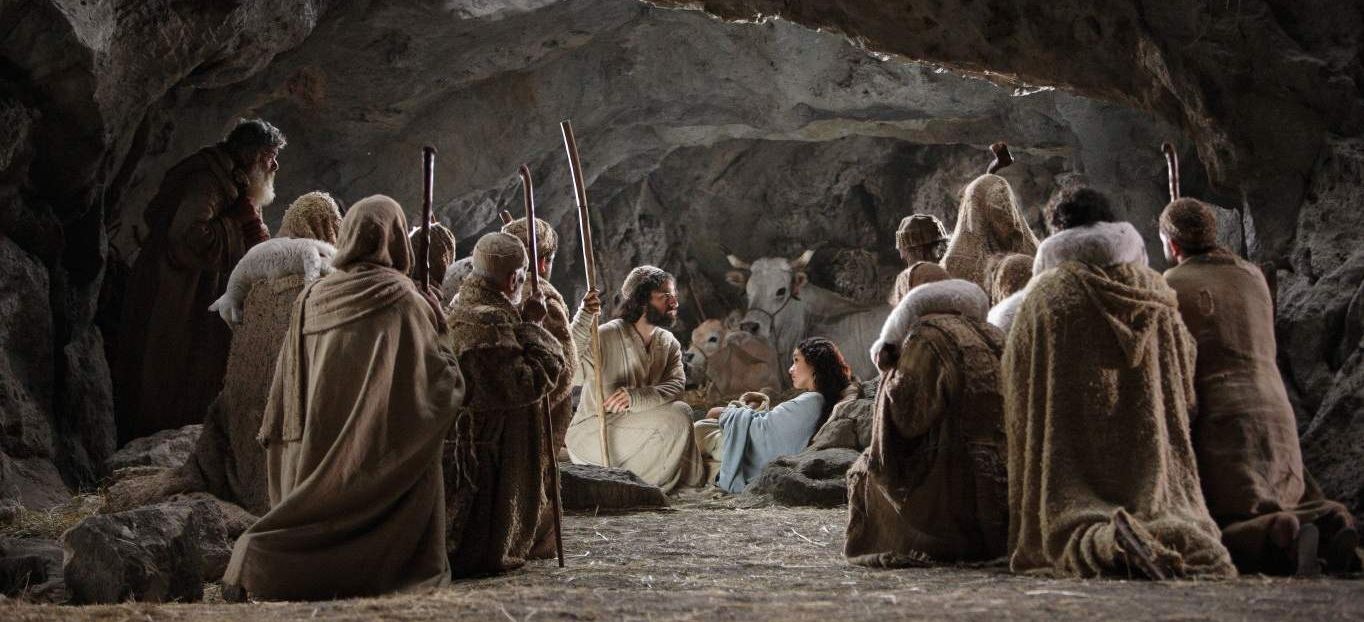
shepherds at manger

BIBLE VERSE FOR TODAY: “The true light that gives light to everyone was coming into the world.” John 1:9 NIV

Here we are, Christmas 2019. Where has the year, where has the decade gone?

Christmas is a time for family, gifts, celebration, travel, songs, lights and much more.

For many that much more can mean grief, loneliness, confusion and other challenging situations and emotions. The Christmas Song, “I’ll Have a Blue Christmas Without You” speaks of lovers who are separated. Debbie’s parents were married on a Sunday morning before Sunday School in May 1943.  A few days later Elmer headed off to serve 39 months in Europe during World War II. I am sure those three Christmases for both of them were “blue.” However, separation in relationships can be more than geographical, and “blueness” has many sources.

This has been driven home in the last few days from a couple of sources. One was a conversation with an individual I met a few months ago when I performed the funeral service for her mother-in-law. Just a couple of months after this death, her sister-in-law died ending a struggle with cancer that had endured for several years.

As we talked she made reference to her church in Chico, California having a “Blue Christmas Service.” This service was for those who had suffered loss or tragedy or just facing a difficult time for a multitude of reasons.  At the end of the service those attending light a candle to symbolize light coming into the darkness of their circumstance.

A few days later I was viewing the Christmas devotional from three faculty members of Colorado Christian University. As they all shared an aspect of the theme, “God Came Near” one of them shared how a generational Christmas tradition was difficult to face due to the death of her mother. It was neat to hear how her adult son stepped up to offer to bake the banana bread that served as the special treat the family enjoyed in the middle of opening presents.

She called attention to Mark’s gospel. Mark doesn’t begin with Jesus’ birth, shepherds or wise men, but with John the Baptist in the wilderness. A wilderness speaks of wandering, loneliness, apprehension, longing, uncertainty, and darkness.

Considering all of this we can find encouragement in knowing that Jesus was born at night, fittingly symbolic of John’s words, “The true light that gives light to everyone was coming into the world.”  The shepherds night time vigil was interrupted by the appearance of angels from heaven. They announced good tidings of great joy, a Savior has been born! One whose birth broke the darkness and through His death would bring light, life and hope and the promise of an eternal home.

Zechariah as the Lord’s prophet declared of the ministry of John the Baptist, that he would “…give his people the knowledge of salvation through the forgiveness of their sins, because of the tender mercy of our God,” by which the rising sun will come to us from heaven to shine on those living in darkness and in the shadow of death, to guide our feet into the path of peace.” (John 1:77-79 NIV)

For those in the wilderness, lost and alone, Jesus can bring light and guide them into the path of peace. Jesus did not come to or for the ideal, He came to the real. A real man and woman. Real shepherds despised and disengaged. Real wise men wandering in hope. He still comes to and for those who are having a “blue Christmas.”

Without Christ, any Christmas regardless of circumstances is “blue.” With Christ the “blueness” a Christmas can be dispelled by the hope, light, and life that Jesus brings. Come and adore Him! And have a Merry Christmas!