
Monthly Archives: January 2016

Troubles, Tests and Trials

The big news of the day is I submitted my book manuscript to begin the review process. This starts the timeline toward an anticipated spring release of my book entitled, “The Longest Campaign.” I was also able to get another work out. I believe the consistency will help me achieve greater mobility.

BIBLE VERSE FOR TODAY… The Israelite foremen saw that they were in trouble….they confronted Moses and Aaron….“May the Lord take note of you and judge,” they said to them, “because you have made us reek in front of Pharaoh and his officials—putting a sword in their hand to kill us!” So Moses went back to the Lord and asked, “Lord, why have You caused trouble for this people? And why did You ever send me?  Ever since I went in to Pharaoh to speak in Your name he has caused trouble for this people, and You haven’t delivered Your people at all.” Exodus 5:19-23 HCSB

Because we are familiar with the story of the Exodus, it is easy to gloss over and forget the struggles that took place before the plagues and eventual freedom for the Israelites. As I read these verses this morning they caught my attention. Moses was the reluctant delivered, but trusting in the Lord he took on the task to be God’s instrument of salvation for his people. But before things got better, the got worse.

He goes to Pharaoh and is rebuffed. Not only that the Hebrew slaves are made to work harder, which results in punishment for the foreman. We see the series of events. Pharaoh creates trouble for the slaves, the slaves confront Moses, Moses confronts the Lord. Everyone is wandering “what is going on? ….Why is this such a good idea? or perhaps like Gideon in years to come “Lord, if you are with us, why is all this happening?”

Moses was walking through all of this day by day. We know the end of the story, he was experiencing the “story.” We can see in Moses’ words the the Lord that he expected an immediate deliverance from Egypt. Instead it was going to be a long journey of a series of plagues. Not only that, the first plagues would create as much hardship for God’s people as they did for the Egyptians.

As I considered this “it-got-worse-before-it-got-better” sequence, I realized how much we see that trials, tests and trouble preceded greatness for many in the Bible the God used.

We see it in David. The shepherd boy anointed King and the slayer of the giant. He found himself as a fugitive for years, running from Saul and hiding in caves. There were trials, troubles and tribulations with a lot of questions and uncertainty. But David was able to hold on to God’s promise and wait for God’s timing for God’s promise to come true.

When we look at Jesus, He was baptized by John and the Bible says, “immediately he was lead by the Spirit into the wilderness to be tempted by Satan.” (Mark 1:12 HCSB) Before the first miracle or words of teaching Jesus faced the test of temptations. The we see at the end of Jesus life, He faced the cross before the resurrection and ascension back to heaven.

As I consider these illustrations, the words of my physical therapist to Debbie at a critical time in my hospital crisis take on greater meaning. As I was in intensive care, Gary Harkness, my physical therapist and strong believer told Debbie, “stay the course, keep your eyes on the cross.” The reminder in that is not just the cross as an object of suffering, but of obedience and the path to resurrection and it was all in God’s plan and purpose.

How we respond when the miracle doesn’t happen immediately and the promise is not fulfilled in our timeline is all important. It is okay to have doubt, confusion and questions. But we need to “stay the course…keep our eyes on Jesus” and to keep following the Lord. That is what Moses did, one step, on plague at a time, until the deliverance came. That is what David did until he was crown King. That is what Jesus did until He was raised and glorified. That is what we need to do until we experience the promise of the Lord in His time and in His way.


Natural Consequences

Perhaps I am getting my New Year schedule worked out. I made it to the fitness center again for an early morning workout. We are working on getting some progress made on our basement remodel and had some help with that today. This afternoon I attend a planning committee meeting for the upcoming National Day of Prayer in May.

BIBLE VERSE FOR TODAY… Because they hated knowledge, didn’t choose to fear the Lord, were not interested in my counsel, and rejected all my correction, they will eat the fruit of their way and be glutted with their own schemes.”  Proverbs 1:29-31 HCSB

In our recent homeowners association meeting the board shared some results from a community survey. Residents were asked how they wanted to approach rising costs to maintaining the community. The majority did not want to see dramatic increases in dues, but they did not want to cut back in any services or expenses. That creates an automatic disconnect that is seen in many aspects of life. We try to ignore that choices need to be made and choices have consequences. As the old saying goes, “you can’t have it all!”

In child raising it is called the “Law of Natural Consequences.” It is designed to teach a child that their actions they choose, are tied to something happening…good or bad. Sometimes those choices lead to what they probably would not want to choose. So, if you don’t eat, you go hungry. If you don’t turn in assignments, you don’t pass the class. If you don’t show up for work, you get fired. When parents mitigate those those consequences, important life lessons are not learned.

We see this concept reflected in the Bible in both the Old and New Testament. Paul wrote to the Thessalonians and said, “For even when we were with you, we used to give you this order: if anyone is not willing to work, then he is not to eat, either. For we hear that some among you are leading an undisciplined life, doing no work at all, but acting like busybodies.”  (2 Thess. 3:10,11 NASB) These men were able to work, they just refused to work.

The concepts of discipline and personal responsibility seem to be missing from our world more and more. We see people all the time wanting to reflect and avoid the consequences of their choices. So, they blame others, society, government or…God. Anyone but themselves.

Solomon observed this in his day. As “wisdom” speaks in a personified manner it puts it forward very clearly. If  you ignore wisdom and the fear of the Lord and reject counsel and correction, guess what? You will, “eat the fruit of [your] their way and be glutted with their [your] own schemes.” It is interesting how when we change the wording to personal pronouns, the impact strikes home. Review our verses for today, inserting “I” and “me” in the proper places.

Because I hated knowledge, and didn’t choose to fear the Lord, and I was not interested in the Lord’s counsel, and because I rejected all the Lord’s correction,  then I will eat the fruit of my way and be glutted with my own schemes.”

Choices! We like to make them, we just don’t like it when the choices we make have negative consequences. It is easy to “do what I want,” if is hard to take time to accept counsel and seek knowledge. It is easy to choose my own way and to spurn the Lord’s way and His counsel. To not do what I would like or prefer to do, requires discipline. Discipline is hard, but discipline has rewards.

So, I put my family first instead of my desires first. I save for that big purchase, instead of going into debt. I get up and go to work, even when I don’t want to. I obey and follow the Lord, even when it is hard.

Why? Because the fruit of my own way leaves a “bad taste” in my mouth and my own schemes will turn against me. There are natural laws and consequences and their are spiritual laws and consequences. You will find that it is the rare exception when the Lord in His mercy allows us to escape the consequences of our own actions.

Of course the greatest consequence of our own actions is an eternity away from the Lord’s presence. God has provided us the opportunity to choose His way and have forgiveness and eternal life. But if we refuse His provision, counsel and offer of life, we will experience the ultimate consequence of “going our own way.” The Living Bible paraphrases the final words of Proverbs 1:31 in this way, “…[you will] experience the full terrors of the pathway you have chosen.”

The natural consequences of our own wisdom is death, but the natural consequence of choosing God’s wisdom, counsel and forgiveness is life.

Manasseh and Ephraim

Today was a good workout day for me. I was at the fitness center in the morning and then returned in the afternoon for a pool workout. Today was the opening session of the legislative session, so I monitored the opening activities on TV.

BIBLE VERSE FOR TODAY… Joseph named the firstborn Manasseh, meaning, “God has made me forget all my hardship in my father’s house.” And the second son he named Ephraim, meaning, “God has made me fruitful in the land of my affliction.” Genesis 41:51,52 HCSB

As Joseph was elevated to second in power in Egypt his life began to change. He was given an Egyptian name Zaphenath-paneah. The meaning of the name is uncertain, but some have suggested the meaning, “reveler of secrets” or “the god speaks and he lives.” However, when Joseph has two sons their names are specific and tied to Joseph’s experience.

Manasseh – “God has made me forget all my hardship in my father’s house.” We realize that this was not just a memory issue, it was a heart issue. This is revealed after Jacob died and Joseph’s brothers were concerned about revenge. Joseph’s well known response to their concern was, “Don’t be afraid. Am I in the place of God? You planned evil against me; God planned it for good to bring about the present result—the survival of many people. Therefore don’t be afraid…” (Genesis 50:19-21 HCSB)

I believe the success of Joseph was possible because he was able to overcome resentment and the haunting memory of his sufferings. The key to this is found in the words, God made me forget…” It was not in Joseph’s ability, it was not a function of time. (e.g. “time heals all wounds.”) It was for Joseph and is for us, only possible to overcome the pain of hardship with God’s help. He can give us the power to forgive and He can allow our lives to overcome the effects of the mistreatment of others and circumstances.

Ephraim means, “God has made me fruitful in the land of my affliction.” The place of slavery and punishment for Joseph turned into a place of position, power and success. Talk about “bloom where you are planted!” Talk about a turn around in your circumstances, talk about “…in all things God works for the God of those called according to His purpose…” (Romans 8:28) Again, it was God who was at work. Our hope for the future and our optimism in life is found in knowing that “God is for us…and with us.”

What is interesting is that we see in scripture Manasseh and Ephraim are always mentioned together in scripture. It seems like they are twins. This is certainly true when it comes to the application of the meaning of their names. To be fruitful in life, you need to deal effectively with the pain and hardships of life.

I have observed that people who hold on to grudges and resentment, never make great strides and progress in life. They often move from job to job or church to church and they carry their hurts and offenses and grudges with them. They continue to be unhappy and unsatisfied and they blame it on their past or view themselves as victims.

Paul assured the Roman’s that in persecution, hardship, unjust treatment, “… in all these things we are more than conquerors through him who loved us.” (Romans 8:37 NIV) As we overcome the challenges of life, it paves the way to being fruitful and being a source of blessing to others. Forgetting and fruitfulness they are not only important aspects of our life, they are intricately tied together.


Changed in the Pit

This morning after my Tuesday prayer meeting time, I conducted a Bible Study at the new Morning Star Assisted Living. I shared about the story of Joseph. One elderly lady told me, “that’s the first time I have heard all of the story about of Joseph.” After a noon meeting, I finally got by the fitness center for a workout.

BIBLE VERSE FOR TODAY… Then Judah said to his brothers, “What do we gain if we kill our brother and cover up his blood? Come, let’s sell him to the Ishmaelites and not lay a hand on him, for he is our brother, our own flesh,” and they agreed. When Midianite traders passed by, his brothers pulled Joseph out of the pit and sold him for 20 pieces of silver to the Ishmaelites, who took Joseph to Egypt.The Lord was with Joseph, and he became a successful man, serving in the household of his Egyptian master.” Genesis 37:26 -28; 39:2 HCSB

The story of Joseph is not only critical in the history and timeline of Israel, but it holds some important lessons.

Joseph was the favored son and he knew it. He knew it not just from his father’s famous and special gift but by the way he was treated. Joseph remained near Jacob while his brothers were out tending the flocks. When Joseph was with his brother he would bringing his father bad reports about his brothers and then to top it off were the famous dreams of Joseph as ruling over his family.

Joseph’s brothers wanted to kill their coddled brother but he ended up in a pit….alone. That is an experience that will get  your attention. It gives time to think, ponder and consider how you are going to respond if given an opportunity to live. We don’t know how long Joseph was in the pit, but when he ended up in Potipher’s house in Egypt he proved himself as diligent and responsible. (Maybe being around dad’s tent, was good training.) But I believe we see a different Joseph coming out of the pit, than the one which went in.

A slave in Egypt, falsely accused by Potipher’s wife, put in prison, forgotten. In all of it, Joseph found he was not alone, but God was with him. Because God was with him, God honored him. Where ever he was he had favor and success. He could have given in to resentment and allowed his heart to become hard and bitter.

I believe in Joseph we see a reflection of the words of Peter, “Humble yourselves, therefore, under the mighty hand of God so that at the proper time he may exalt you..” (1 Peter 5:6 ESV) The due time for Joseph came when the dreamer became the interpreter of dreams for others and that resulted in his dreams coming true.

Joseph was 30 years old when he entered into service for Pharaoh, and lived 110 years. Thirty years that included hardship and the school of hard knocks to be prepared for 80 years in the court of Pharaoh. He went from favored son, to favored servant, to favored prisoner to favored ruler. But I believe a critical part of that journey was the journey from the pit to the palace.

When we face dashed dreams, challenges and trials, we need to guard our hearts and minds. We need to remember that God is with us and will help us to excel, even in challenging situations and will fulfill His purpose in our life.


Lost Privilege

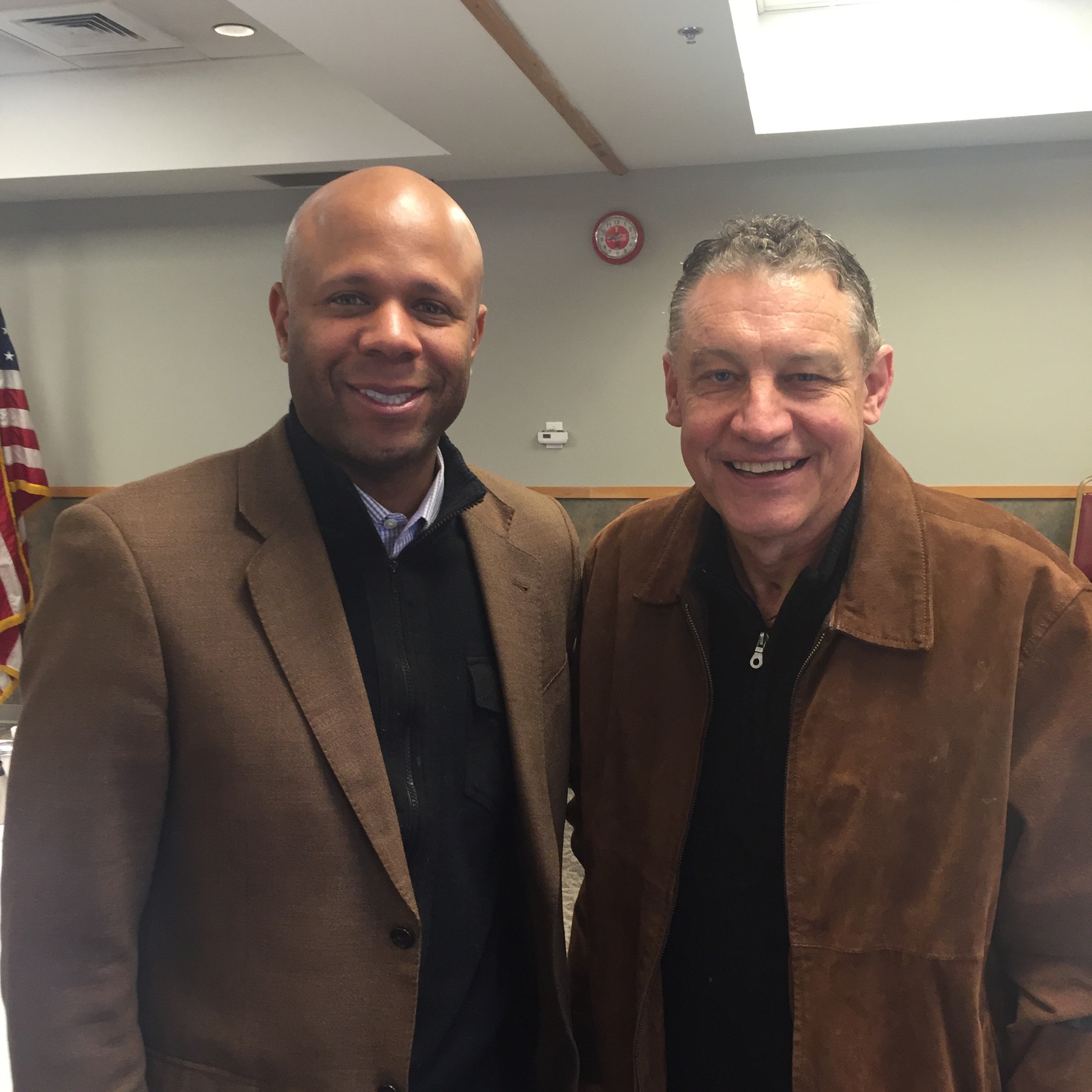
IMG_60221This morning it was good to have Ryan Frazier at our Monday breakfast meeting. I got acquainted with Ryan about six years ago when he ran for Congress. He finds himself in a growing field of candidates for the Republican nomination for the US Senate.

BIBLE VERSE FOR TODAY… Reuben, you are my firstborn,my strength and the firstfruits of my virility, excelling in prominence, excelling in power. Turbulent as water, you will no longer excel, because you got into your father’s bed and you defiled it—he got into my bed.” Genesis 49:3,4 HCSB

The position of the firstborn was one of special privilege, blessing and honor. It is interesting that Jacob, “stole” Esau’s birthright and then his blessing as the firstborn. We read then of an “indiscretion” on Ruben’s part as Jacob’s firstborn, when he slept with Bihah his father’s concubine (who was Rachel’s handmaid.)

It seems that Ruben worked to get back into favor with his father. When the brothers wanted to kill Joseph, Ruben spoke up, When Reuben heard this, he tried to save him from them. He said, “Let’s not take his life.” Reuben also said to them, “Don’t shed blood. Throw him into this pit in the wilderness, but don’t lay a hand on him”—intending to rescue him from their hands and return him to his father. (Genesis 37:22 HCSB)

We also see Ruben speaking up when the family was in need and Jacob was reluctant to have them return to Egypt.

[Jacob said] “Now you want to take Benjamin. Everything happens to me!” Then Reuben said to his father, “You can kill my two sons if I don’t bring him back to you. Put him in my care, and I will return him to you.” (Genesis 42:36,37 HCSB)

Reuben showed leadership, courage and willingness to sacrifice, but it seemed lost on his father, who allowed the leadership of the family pass eventually to Judah (who had twin children from a relationship with his daughter-in-law). As Jacob “blessed” his children before his death, Reuben’s strength and character are mentioned but also the consequences of his misdeeds.

As I reflect on Ruben and what little we do read in the Bible I think of the adage, “the greater the responsibility the fewer the choices.” Esau’s actions and Reuben’s actions as firstborn sons cost them their position of privilege. However, Jacob’s deceit and Judah’s “indiscretion” didn’t seem to carry the same degree of judgment and shame.

These differences can be a source of consternation. Some of the outcome is more related to the culture of the day, than reflecting the character and mercy of God. We also see the judgment of man, is different from the Lords. We are also reminded that our actions do have consequences, some greater than others; and at times different for others.

We can also see that the loss of status and future for Reuben, did not result in a loss of his son-ship. There was still a tribe of Reuben and when we see the list of tribes of those sealed in Revelation 7 we see Reuben listed in second position.

We can conclude as David did, “…Let us fall into the hands of the LORD, for his mercy is great; but do not let me fall into human hands.” (2 Samuel 24:14 NIV) We can also be confident, “…The judgments of the Lord are true and righteous altogether.” (Psalm 19:9 NKJV)

The Witness of Creation

This morning I helped with the Sunday chapel service at Mackenzie Place retirement facility. I always enjoy this time connecting with the residents as Pastor Steve Harris and I team up once a month. The residents always are gracious to express their appreciation for us being there. This afternoon, I enjoyed a visit from Ted and Murlene Grizzle. It has been a long time since connecting with them and it was good to hear of improved health for Murlene and the Lord’s faithfulness during some challenging months. These dear folks were such a blessing to me during my health crisis that I was pleased to hear that my devotionals had been a source of encouragement to them in recent months.

BIBLE VERSE FOR TODAY… The heavens declare the glory of God, and the sky proclaims the work of His hands. Day after day they pour out speech; night after night they communicate knowledge. There is no speech; there are no words; their voice is not heard. Their message has gone out to all the earth, and their words to the ends of the world.” Psalm 19:1-4 HCSB

Has your “breathe been taken away” by a view of God’s creation? Have you stood in awe of the natural world? Living in Colorado, we are afforded an opportunity to gain a view of our world from a “different perspective.” Climbing a mountain or just driving through the mountains provides some opportunities to gaze at the special beauty of God’s creation.

We find in the Bible not just the fact that God created the “heavens and the earth” but that creation speaks to God’s glory, work and existence. Often people will express, “feeling closer to God” in the beauty of nature. Is that just an expression or a response of what our hearts know to be true regarding the One who, …sits above the circle of the earth…” (Isa. 40:22 NLT)

I recall being with our children when they were small viewing a great scene of nature and saying, “look kids! All this happened by accident! Isn’t wonderful?” They were quick to pick up on my sarcasm.

The psalmist declares that the “heavens declare God’s glory and the sky proclaims the work of His hands.” God is powerful and He is to be worshiped with awe and reverence. When Jesus calmed the wind and the raging sea, His disciples responded, “What kind of man is this? Even the winds and the waves obey him!” (Matt. 8:27 NIV)

Throughout the Bible we see  God demonstrating His power over creation. From the parting of the seas, to His command over the earth and animals in the Old Testament, to darkening the sun and an earthquake when Jesus was crucified.

Creation not only gets our attention about God, but call us, even without words, to seek Him out. For His invisible attributes, that is, His eternal power and divine nature, have been clearly seen since the creation of the world, being understood through what He has made. As a result, people are without excuse.” (Romans 1:20 HCSB)

I still recall a friend of mine who worked in farming and ranching, commenting, “it is difficult to work with the earth and around animal life and not believe in a higher power.”

God makes Himself known, so that we will seek Him and know Him. Paul said to those in Athens, The God who made the world and everything in it—He is Lord of heaven and earth and does not live in shrines made by hands…He Himself gives everyone life and breath and all things…He did this so they might seek God, and perhaps they might reach out and find Him, though He is not far from each one of us.” (Acts 17:24-27 HCSB)

Psalm 19 not only declares God’s existence through creation, but His revelation through His commands, love for people and mercy available for all. The Lord, “renews ones life” (Psa. 19:7) makes “the heart glad” and makes our “eyes light up.” (Psa. 19:8 HCSB)

It is one thing for God to create life in the world, it is another for Him to create life in us. When that happens, we rejoice in Him not just as the God who is, but in the Lord, my rock and my Redeemer. (Psalm 19:14 HCSB)

Powerful Help, in Pitiful Circumstances

20160109_093652This morning I attended the men’s breakfast at Timberline Church. Keith Godbey was our special guest. He shared about the new book he and his sister have compiled on the career of his parents, Ken and Jeri Godbey. They served five decades as missonaries in Nigeria, Africa and helped pave the way to turn the “dark continent” in to a place where the light of  Christ shines. Besides vivid memories of the Godbey’s as missionaries, Ken Godbey married Debbie’s parents in 1942 when he served as the pastor of Greeley First Assembly. The book entitled, “A Dark Place, Before the Dawn” can be found on iTunes and includes pictures and video and audio from the Godbey’s years of service.

BIBLE VERSE FOR TODAY… He rescued me from my powerful enemy and from those who hated me, for they were too strong for me. They confronted me in the day of my distress, but the Lord was my support. He brought me out to a spacious place; He rescued me because He delighted in me.” Psalm 118:17-19 HCSB

It is one thing to face opposition and struggles, but when it comes at the worst possible time and seems to “pile on” it is easy to give up hope and despair. In this familiar psalm of deliverance we see the power and might and intervention of the Lord in the worst of circumstances.

Early in the psalm, we read, “…the snares of death confronted me. I called to the Lord in my distress, and I cried to my God for help.”  (Psa. 118:5,6 HCSB) The deeper we get into the psalm the more we understand the cause of the distress and the sense of impending doom. The psalmist was hated by an enemy that was strong and relentless. This was not some “friendly” competition. This was vengeance being played out. In addition, the attack came in a “day of distress.” It is one thing to face the challenges of life unexpectedly or when we are on “top of the world”; it is another for them to come when we are already feeling defeated.

The key comes when the psalmist says in his distress he “calls on the Lord.” He doesn’t just question or complain or turn away from God. Instead he runs to God. He cries out to the Lord and the Lord hears. When the Lord hears He responds.

We see vivid descriptions of the power of the Lord. “Then the earth shook and quaked; the foundations of the mountains trembled;… He parted the heavens and came down..His clouds swept onward with hail and blazing coals…The Lord thundered from heaven…” (Psa. 118:9-13 HCSB)

The palmist rejoices in the Lord’s deliverance, but he also shows the importance of keeping the right attitude and response. “…I have kept the ways of the Lord and have not turned from my God to wickedness. Indeed, I have kept all His ordinances in mind and have not disregarded His statutes. I was blameless toward Him and kept myself from sinning.” (Psa. 118:21-23 HCSB)

We find in these words the importance of keeping our focus and maintaining the right attitude. It was Job who said, “though he slay me, yet will I trust in Him.” (Job 13:15) As we see the Lord’s deliverance, we realize life reveals the Lord doesn’t deliver in every circumstances, like we anticipate or desire. But He allows us to be over-comers as we keep our eyes on Him. Our trust and faithfulness is rewarded.

“With the faithful You prove Yourself faithful; with the blameless man You prove Yourself blameless; with the pure
You prove Yourself pure, but with the crooked You prove Yourself shrewd. For You rescue an afflicted people,
but You humble those with haughty eyes. Lord, You light my lamp; my God illuminates my darkness. With You I can attack a barrier, and with my God I can leap over a wall. (Psa. 118:26-29 HCSB)

These words remind me of Paul’s words to Timothy..This saying is trustworthy: For if we have died with Him,
we will also live with Him; if we endure, we will also reign with Him; if we deny Him, He will also deny us; if we are faithless, He remains faithful, for He cannot deny Himself.” (2 Tim. 2:11-13 HCSB)

Regardless of how pitiful our circumstances, we can find a powerful God available as we call and place our trust in Him and maintain our focus on living according to His word.

Living on God’s Mountain

Today we had a “snow day.” We had at least four inches of snow. Debbie was out on calls, but able to come home early. I was able to get some work done on the final manuscript of my book and look forward to its submission to the publisher.

BIBLE VERSE FOR TODAY… “Lord, who can dwell in Your tent? Who can live on Your holy mountain?” Psalm  15:1 HCB

David in Psalm 15 and 24 ask a similar question, “Who can live on Your holy mountain?” (Psa. 15:1 HCSB) “Who may ascend the mountain of the Lord? Who may stand in His holy place?” (Psa. 24:3 HCBS)

In Israel’s history we see the Lord appearing to Moses on Mount Sinai in a cloud and fire. Moses and the elders travel up the mountain to meeting with God. The people are warned to stay away from the mountain or face God’s judgment. Later when the Temple would be built we find that the holiness of the Lord created a separation from the holiness of God and the people. The Temple curtain created a barrier to the presence of God.

The response to the question, “who can live on Your holy mountain?” reveals the need for clean hands, a clean heart, a mind not set on falsehood, and a list of character qualities that no one can consistently or completely possess.  The promise to those who “qualify” is they will receive, “…blessing from the Lord, and righteousness from the God of his salvation.” (Psa. 24:5 HCSB)

No one in themselves qualifies. But just as the Lord provided a path to righteousness through the law of Moses on Mount Sinai, the Lord established another covenant on “Mount Calvary.”  Through faith in Christ we are forgiven and declared righteous by God’s provision. As a result, we can know and experience blessing from the Lord and the righteousness that comes from God. So, instead of fear concerning the presence of the Lord, we can respond with the psalmist,

“How lovely is Your dwelling place, Lord of Hosts. I long and  yearn for the courts of the Lord; my heart and flesh cry out for the living God.” (Psa. 84:1,2 NIV)

We can also anticipate the day when the Lord brings His dwelling to us,

“I also saw the Holy City, new Jerusalem, coming down out of heaven from God, prepared like a bride adorned for her husband. Then I heard a loud voice from the throne: Look! God’s dwelling is with humanity, and He will live with them. They will be His people, and God Himself will be with them and be their God.” (Revelation 21:2,3 HCSB)