
Monthly Archives: April 2016

Run-aways Who Returned

20160413_085458I had another busy day today. This morning, I had a radio interview (via phone) about the upcoming National Day of Prayer, followed by my weekly conference call with my energy partners team. After my chiropractor appointment, I attended the Prime-Time lunch at church and then headed to Loveland for a National Day of Prayer planning committee meeting. I have a meeting tonight….if I decide to go.

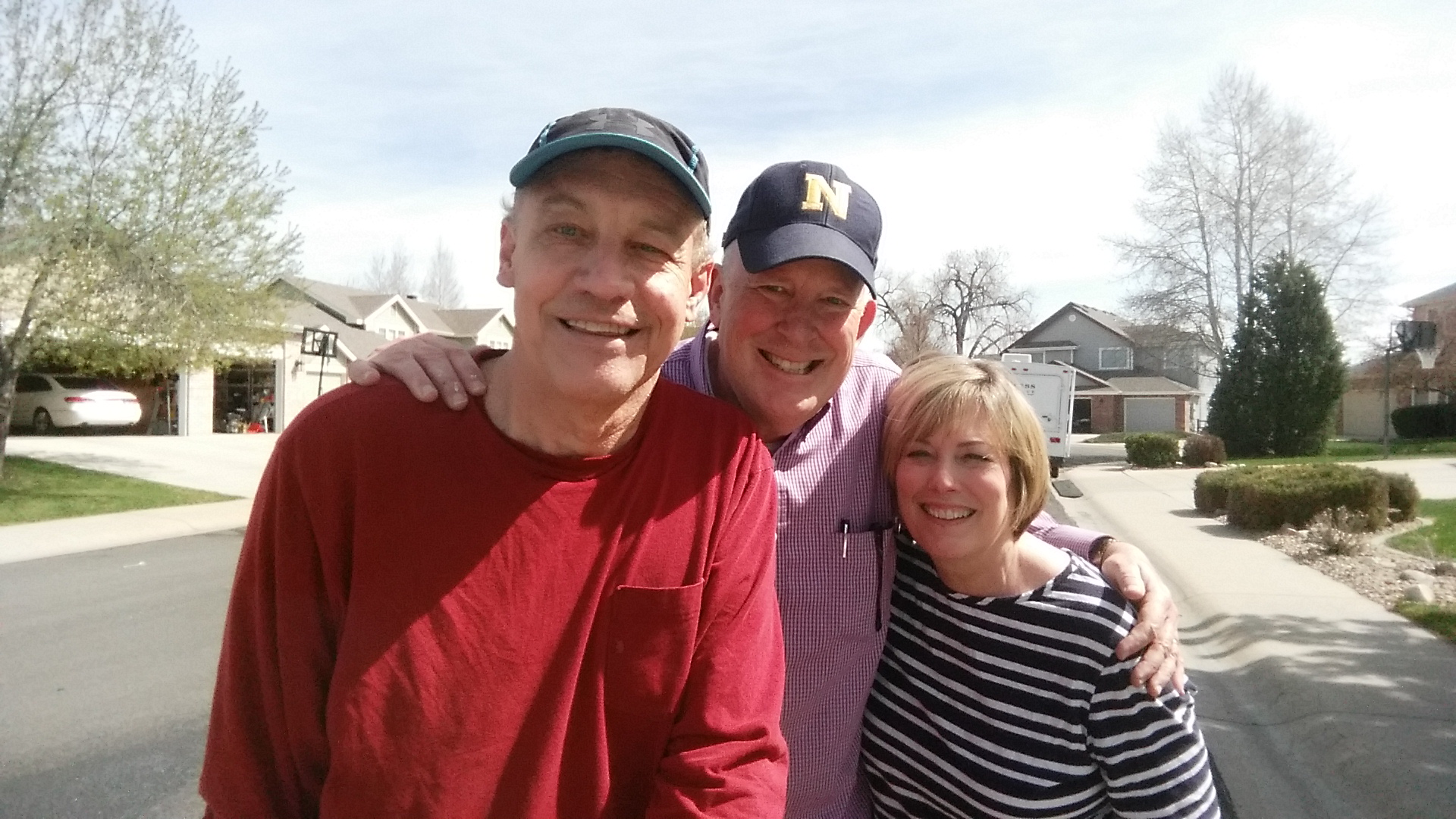
The weather forecast for this weekend is for a heavy spring snow. I’m glad we have all of our drainage issues resolved around the house. Our basement should be protected from water leaks. Bill Nation completed the work in front of our house. Bill was my respiratory therapist at Northern Colorado Rehab Hospital during my two month stay. His favorite Bible verse is Psalm 18:2. He carries it with him on a 3×5 card, The Lord is my rock, my fortress, and my deliverer, my God, my mountain where I seek refuge, my shield and the horn of my salvation,my stronghold.”

BIBLE VERSE FOR TODAY…. “…Bring Mark with you, for he is useful to me in the ministry.” 2 Timothy 4:11 HCSB

In the last few days I read the Book of Jonah (in the Old Testament) and the Book of Philemon (in the New Testament). As I reflected on some of my recent encounters with scripture, I began to think about “run-aways” that returned. Each is different, each became a “run-away” in their own way.

Jonah, the prophet was called by God to do God’s work and to speak God’s word. But when the Lord’s instruction ran contrary to his view of Israel’s enemies, and his own desires, he ran way from the call of God.

One of the most troubling statistic is the number of ministers and pastors who leave “the ministry.” The reasons are as different and as unique as the individuals but some similarities have been noted. One article noted that the list of common reasons include, discouragement, failure, loneliness and burnout. (http://www.churchleaders.com/pastors/pastor-articles/161343-tim_peters_10_common_reasons_pastors_quit_too_soon.html)

Many churches and denominations are paying attention to these issues and endeavoring to provide sabbaticals, and mentors to support pastors and keep them functioning in a productive manner. Many after a break, return to ministry or a ministry role of some kind. I’m thankful that, just like Jonah, God calls and calls again.

Onesimus was the run-away slave. His owner Philemon was a friend of the apostle Paul. We see Philemon associated with the church in the city of  Colosse, to which Paul wrote a letter. We don’t know the reasons and for how long Onesimus was a fugitive slave. All we know is that he by intention or default he came into the life of Paul. As a result, Onesimus becomes a follower of Christ. Even though Paul saw some usefulness in Onesimus to his own ministry, he knew that the slave had to be returned to his master. Philemon was restored to a run-away slave, but he didn’t come home the way he left.

I think of my friend Doyle Robinson who serves run-a-way youth on the streets of downtown Denver. Many of these troubled young men and women in the  run-away from a bad home situation or just out of their own rebellion. They “run into” Doyle and his staff and find themselves confronted by a heavenly father who loves them and desires relationship with them. Doyle has been used on several occasions to reconnect a youth to his or her family and to be a turning point on the road of a run-away.

When I think of run-away youth, the “prodigal son” comes to mind. Leaving the safety, security and provisions of home and his father, he ventures out to experience life on his own. In time he finds himself moving from party life to pig-pen living. When he decides to stop running and return home, he finds a father waiting, looking and longing to celebrate.

Onesimus, found a new relationship he never had and came to a family her never knew. The prodigal grew tired to the family he knew and in viewing it with contempt, went out on his own to “experience life.” In the process he discovered the value of the life he was living. Both of these related to situations of individual lives today.

Mark journeyed with Paul and Barnabas on their first missionary journey. For some reason, before the trip was over, he “ran-away” and returned home. This act of desertion had such a negative impact on Paul, it lead to a separating of ways between Paul and Barnabas. However, as Paul comes to the end of his life, he recognizes that Mark has proven himself to be a committed follower of Christ and a valuable partner in ministry. As others are leaving Paul, he seeks to be restored to Mark. (This is Mark, who is considered to be first gospel writer.)

What we see in Mark, is that how you end is more important than the mistakes or poor judgments or issues of the past. The Lord redeems our failures. We must remember that our failures are not fatal when it comes to the Lord. “…though the righteous fall seven times, they rise again…” (Proverbs 24:16 NIV)

The bottom line? There is hope for run-aways. Perhaps that run-away is you, or someone you know.


Command Versus Appeal

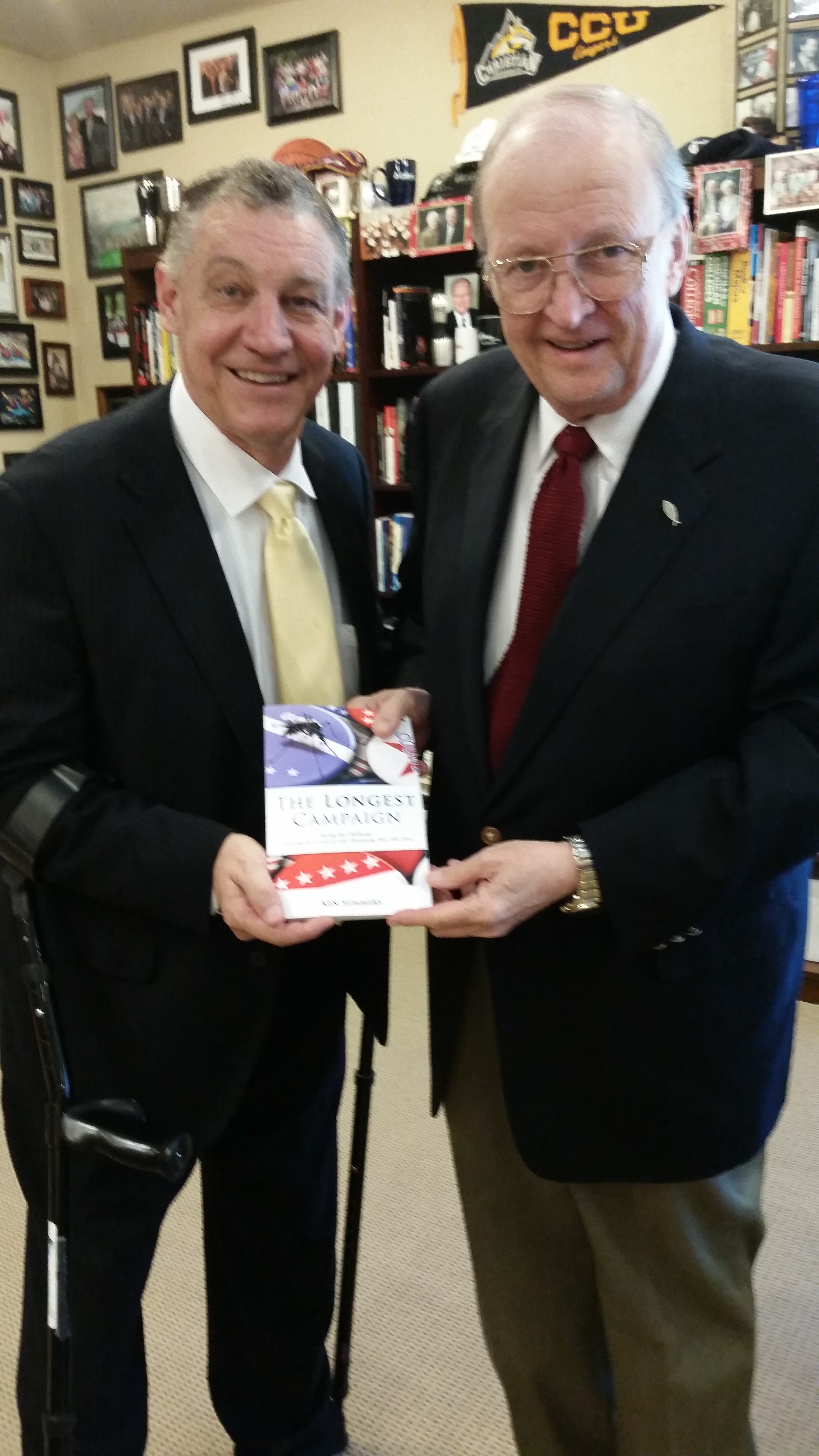
20160412_190549-120160413_103528I traveled to Denver today. I stopped by Colorado Christian University to drop off a copy of my book to President Bill Armstrong. What a gracious and effective leader and servant of the Lord! I was at the Capitol testifying on a Physical therapy bill in the senate. Our bill is on life support; but we are trusting for a resurrection.

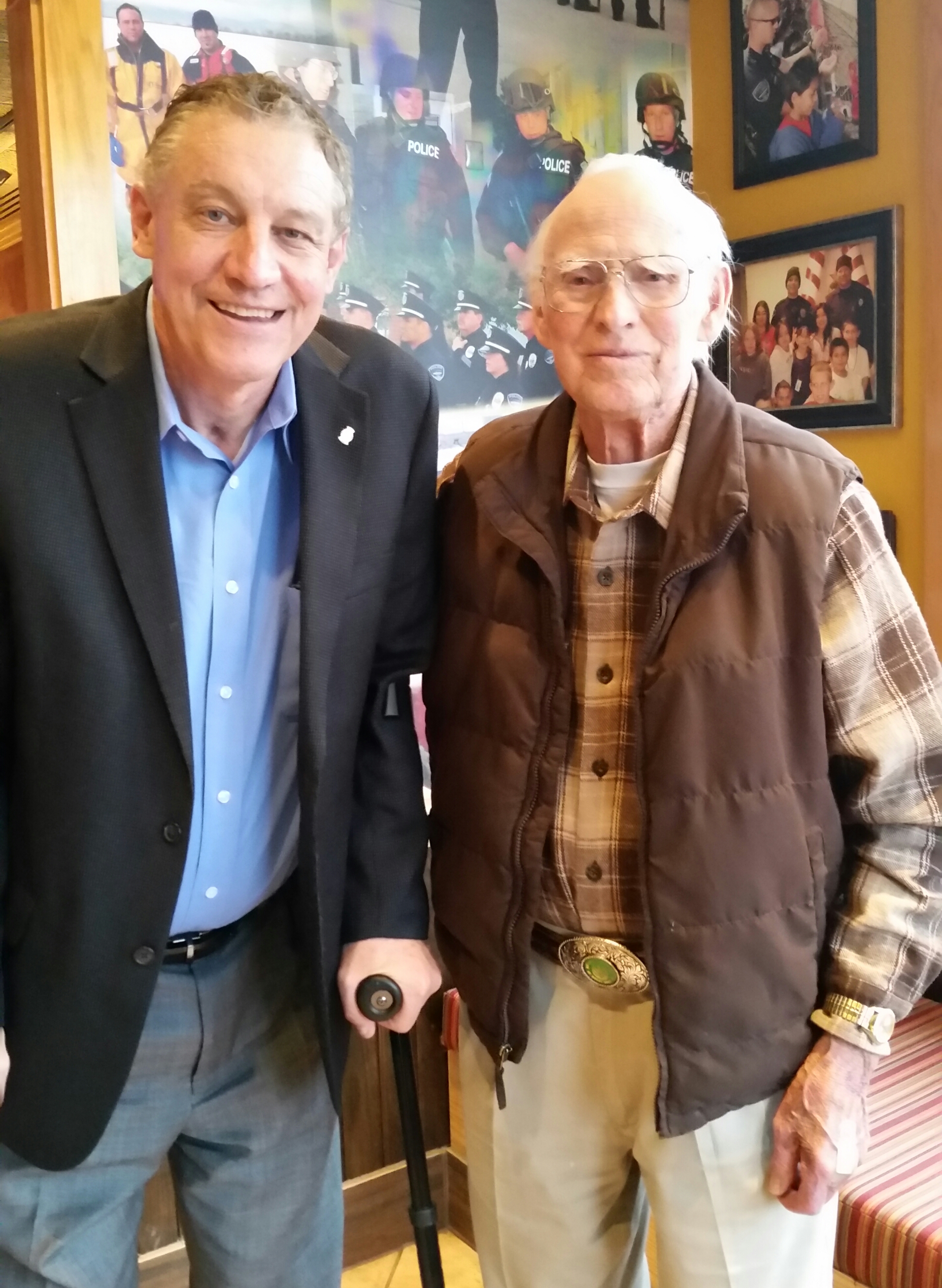
Yesterday evening, my day ended with a trip to Brighton and a visit  with father’s cousin, Courtland Rybicka (age 90). I took him a copy of my book to thank him for his support of my recovery. We enjoyed a meal out and conversation about family history.

BIBLE VERSE FOR TODAY… For this reason, although I have great boldness in Christ to command you to do what is right, I appeal to you, instead, on the basis of love.” Philemon 8,9 HCSB

What is the best way to motivate someone to action. I recall in my University business management classes forty years ago, discussing extrinsic versus intrinsic motivation. Motivations by outward force compared to inward desire. Paul, even though he was in a position of authority to demand Philemon act in the way he desired in restoring a runaway slave, chooses a different approach. His appeal is the basis of love. Love for Christ and love for one whose life has been changed by Christ.

Paul did so knowing Philemon’s heart. For I have great joy and encouragement from your love, because the hearts of the saints have been refreshed through you, brother.” (Philemon 7) Paul knew Philemon’s character and actions that reflected love for Christ and love for others. As a result, his appeal was not based on something that was “out of character” for this brother in the Lord.

Paul places himself in a position as  one committed to reconciling broken trust and broken relationships. In many situations that is what is needed. Paul had relationship with Onesimus, he had relationship with Philemon. He stood in a unique position to leverage his relationship with both of these men to bridge the gap of separation and for the “prodigal slave” to be returned to his master.

But this reconciliation would begin a new relationship. As Paul reflected, For perhaps this is why he was separated from you for a brief time, so that you might get him back permanently, no longer as a slave, but more than a slave—as a dearly loved brother.” (Philemon 15,16 HCSB)

Paul seem to apply his own Romans 8:28 perspective here. And we know that in all things God works for the good of those who love him, who have been called according to his purpose.

What good could come out of a slave running away? A slave that in his running away from his master, ends up running into the arms of “The Master.” Onesimus “runs into Paul” who introduces him to Jesus and the slave of a man becomes a slave of Christ. And now as a slave of Christ, the slave of man, becomes a brother in the Lord. Who said, “God doesn’t have a sense of humor?!”

In our lives God may want to use us in reconciling broken relationships. I’m glad Paul didn’t say “that’s not my business” or “Onesimus, you are on your own.” Remember how a man by name of Barnabas, brought a newly converted Saul of Tarsus to the apostles in Jerusalem?

We need to know the best way to approach someone to challenge them to do what is honoring to the Lord. We can demand, quote scripture and lecture; or as Paul, we can appeal on the “basis of love.” Sometimes, we may need to wait and allow the Lord to work on the heart. We don’t know how quickly Philemon responded to Paul’s appeal but we can be confident that he did.

Once again we see the practicality of the Bible. What present day “business management” has described as methods of motivation, we see reflected in this personal letter of Paul to a friend.

Second Chances

20160412_101846-1Today was a busy a long and busy day. But is was a good day. My day had of meetings had two significant personal connections, that served as the bookends of my day. This morning, I met with Marilyn Schock, the COO of Medical Center of the Rockies and Poudre Valley Hospital (part of UC Health Systems). When I was first hospitalized at McKee Hospital in July 2013, Marilyn was the CEO of the hospital. She made several late night visits to my ICU room to visit and encourage me. Her Occupational Therapy background equipped her with the ability to read lips. I was surprised how those visits that took place almost three years ago were so fresh in her mind. They provided greater insight to me of what I was experiencing and feeling during those early days. It was an honor to meet her when I was conscious and to present her with a copy of my book. (I will share about my end of the day meeting tomorrow)

BIBLE VERSE FOR TODAY…Then the word of the Lord came to Jonah a second time:  “Get up! Go to the great city of Nineveh and preach the message that I tell you.”  So Jonah got up and went to Nineveh according to the Lord’s command.” Jonah 3:1-3 HCSB

Have you ever been given a “second chance”? While life does not have a “rewind” button, we are often afforded a second chance. Perhaps it is in a job, a marriage, in school, in a friendship. A second chance indicates an opportunity to “get it right” the second time. It is an opportunity to redeem past failures or missed opportunities. Life can be unforgiving, so when second chances come our way, it is important to understand the “gift” we have been given.

Jonah had a second chance to respond to God’s call to preach to the city of Nineveh. It is easy to gloss over the statement, but it should get our attention, “Then the word of the Lord came to Jonah a second time….” After surviving a fierce storm and spending three days in the belly of a fish, Jonah was in  a different state of mind.

The first time God spoke to Jonah this was his response,The word of the Lord came to Jonah son of Amittai: “Get up! Go to the great city of Nineveh and preach against it, because their wickedness has confronted Me.”  However, Jonah got up to flee to Tarshish from the Lord’s presence….” (Jonah 1:1-3 HCSB)

Jonah not only rejected the Lord’s instruction, he tried to get as far as he could from Nineveh and the presence of the Lord. But Jonah found the Lord could put a “hook” in the plans of man as easy as a man can put a hook in the mouth of a fish.

Sometimes the preparation for a second chance requires the Lord getting our attention through some difficult situations and circumstances. Jonah being fish bait was unique, but the Lord can use other means to get our attention. Like Jesus words to Saul on the road to Damascus we learn “It is hard for you to kick against the goads.” (Acts 26:14 NIV) or as the New Living Translation explains, “It is useless for you to fight against my will.”

Jonah became the most effective evangelist of his day. Going in to the capital city of the enemy of Israel and preaching judgment, the people begin to heed the message and respond in fasting and repentance. Some commentators believe the effectiveness of Jonah’s message may have been enhanced by the seaweed around his head and his skin bleached pale by the stomach acids of a fish! I’m thankful God uses those who have a “second chance.” Missed opportunities, can be turned into redeemed opportunities when God is in charge of our life.

I am thankful for one who has been given a “second chance.” Not only in life, but in a focus of life that is bringing greater glory and honor to the Lord. My health crisis has afforded opportunities for ministry and an impact on others that is greater than that which I had when in active pastoral ministry.

Going into politics was not a “walking away” from God, but it was a significance change from the focus of ministry that had been a part of my life for almost 28 years. While the opportunities are far different than in the past, the Lord has provided an outlet for sharing Biblical truth as a teacher and coming alongside of people in the sunset years of life as a pastor that resonated with me in the early years of my call to ministry.

You may not have the opportunity for a complete “do over” but the Lord will provide you a “second chance” if you ask for it, recognize it and seize it. It is all part of His work of redemption.


Champion of the “Little Guy”

Today I was up early, had my morning Bible reading, took a nap and got up before 7:30 a.m. I spent most of the day on some office work and getting some final adjustments made for my book. I did have a fitness center workout and the rest of my week is fairly busy with appointments each day.

BIBLE VERSE FOR TODAY… I will fervently thank the Lord with my mouth; I will praise Him in the presence of many. For He stands at the right hand of the needy to save him from those who would condemn him.”                      Psalm 109:30,31 HCSB

So often in our world today, we hear the question asked, “who is looking out for the “little guy?” We hear politicians say that they will look after those so easily overlooked in society and those who are struggling and oppressed.

These are some of the thoughts that came to my minds when I read, “He stands at the right hand of the needy to save him from those who would condemn him.” Consider the complaint of the psalmist in his need, oppression and suffering…

“They surround me with hateful words and attack me without cause.” (Psa. 109:3 HCSB)

“They repay me evil for good, and hatred for my love.” (Psa. 109:5 HCSB)

“He loved cursing…he took no delight in blessing….” (Psa. 109:17 HCSB)

“I have become an object of ridicule to my accusers; when they see me, they shake their heads in scorn.” (Psa. 109:25 HCSB)

The palmist in responding to those who are oppressing, pleads with God to “get ’em.”

Set a wicked person over him; let an accuser stand at his right hand.  When he is judged, let him be found guilty, and let his prayer be counted as sin….Let his children wander as beggars, searching for food far from their demolished homes. Let a creditor seize all he has; let strangers plunder what he has worked for.” (Psa. 109:5-6,10-11 HCSB)

After he “vents his spleen” against “the man.” We see that the petitions turn toward what he needs from the Lord,

“But You, Yahweh my Lord, deal kindly with me because of Your name; deliver me because of the goodness of Your faithful love. For I am afflicted and needy; my heart is wounded within me. I fade away like a lengthening shadow; I am shaken off like a locust.Help me, Lord my God; save me according to Your faithful love so they may know that this is Your hand and that You, Lord, have done it.” (Psa. 109:21-23, 26-27 HCSB)

It is interesting how we long for justice and judgment against others, but mercy for ourselves. Perhaps that is why Jesus said, “bless those who curse you, pray for those who mistreat you.” (Luke 6:28 NIV)

The psalmist does recognize the contrast between his accusers and the Lord. We can be confident that the Lord will come to our aid; even if He doesn’t do all that we would like Him to do those who are against us. At the end we see a clear understanding of our role and God’s role.

What is our role? I will fervently thank the Lord with my mouth; I will praise Him in the presence of many.” We don’t back down, we stop trusting and relying on the Lord. We continue to let others know that our confidence is in the Lord. “The LORD is my rock, my fortress and my deliverer…” (Psalm 18:2 NIV)

What is the Lord’s role? He stands at the right hand of the needy to save him from those who would condemn him.” The Lord provides the strength that we need and He is ready to be the One who defends and rescues. You don’t need to rely on campaign promises to have that assurance. That’s a good thing!


The God Who Hears and Intervenes

20160410_151320-1This ended being a great Sunday for me. I had an early morning meeting with the Allies Men’s ministry team to work on logistics for our upcoming retreat. I then enjoyed having Steve Harris help me with a chapel service at Mackenzie Place in the morning and Jerry Pippin play the piano for an afternoon chapel service at Collinwood. Jerry is one of the best pianists that I know. I had fun, leading some old hymns, praying for the people and preaching. If I had Jerry as a pianist when I was a pastor in a rural community over 30 years ago, we could have grown the church to a large number. Jerry and his wife Virginia lead the seniors ministry at Timberlines and were a great support during my hospitalization.

BIBLE VERSE FOR TODAY… Give thanks to the Lord, for He is good; His faithful love endures forever.Let them give thanks to the Lord for His faithful love and His wonderful works for all humanity. Psalm 107:1,8 HCSB

Psalm 107 is a psalm of thanksgiving for the faithfulness of the Lord. In the process, it reveals the faults, troubles and trials that God’s people brought on themselves. They experienced the hardship of their own choices, they cried to the Lord and the Lord delivered. That seems to be the sequence that we can observe throughout time.

Throughout the psalm we find a description of the troubles and trials that came to God’s people and we read repeatedly, Then they cried out to the Lord in their trouble; He rescued them from their distress.” (Psalm 107:6,13,19,28) I’m glad for the Lord’s patience and loving kindness. He relentlessly hears our cry and rescues us from distress, even of our own making.

What is to be the response to a God like this? It is to be one of grateful praise and thanksgiving. Let them give thanks to the Lord for His faithful love and His wonderful works for all humanity.” (Psalm 107:8,15,21,31 HCSB)

Look at the litany of God’s wonderful works and interventions available for “all humanity.” Remember that He is still doing the same today in our lives and circumstances.

“He rescued them from their distress. He led them by the right path to go to a city where they could live.” (Psa. 107:6,7) Praise God, He can direct us to where we need to be. He Rescues from the curse of sin and darkness and puts on a path to a heavenly home.

“For He has satisfied the thirsty and filled the hungry with good things.” (Psa. 107:9) Let God be the One who satisfies the true need of your life. The true needs of humanity are met in Him

“He brought them out of darkness and gloom and broke their chains apart.” (Psa. 107:14) Praise God that He is a deliver. He brings light to darkness and breaks the chains of hopelessness and despair.

“He sent His word and healed them; He rescued them from the Pit.”   (Psa. 107:20) Praise God that God’s Word is powerful to heal and to rescue.

“He stilled the storm to a murmur, and the waves of the sea were hushed….Then He guided them to the harbor they longed for.”  (Psa. 107:29-30) For the lost, harried and storm tossed, Jesus speaks “peace be still” into our lives and we can arrive at the place we have always sought.

“He turns a desert into a pool of water, dry land into springs of water. He causes the hungry to settle there, and they establish a city where they can live. They sow fields and plant vineyards that yield a fruitful harvest.” 
(Psa. 107:35-37) Praise the Lord that He creates fruitfulness where there is desolation. He provides what is needed, where it is needed…in abundance.

“…He lifts the needy out of their suffering and makes their families multiply like flocks.” (Psa. 107:41) Praise the Lord, He brings comfort to our suffering and cares for those, we care for the most.

Finally, it is imperative that we don’t treat the Lords provision with contempt. We need to stop, ponder, observe and commit our lives to the One who can intervene in our present and secure our future.Let whoever is wise pay attention to these things and consider the Lord’s acts of faithful love.” (Psa. 107:43 HCSB)


Wise Use of Power

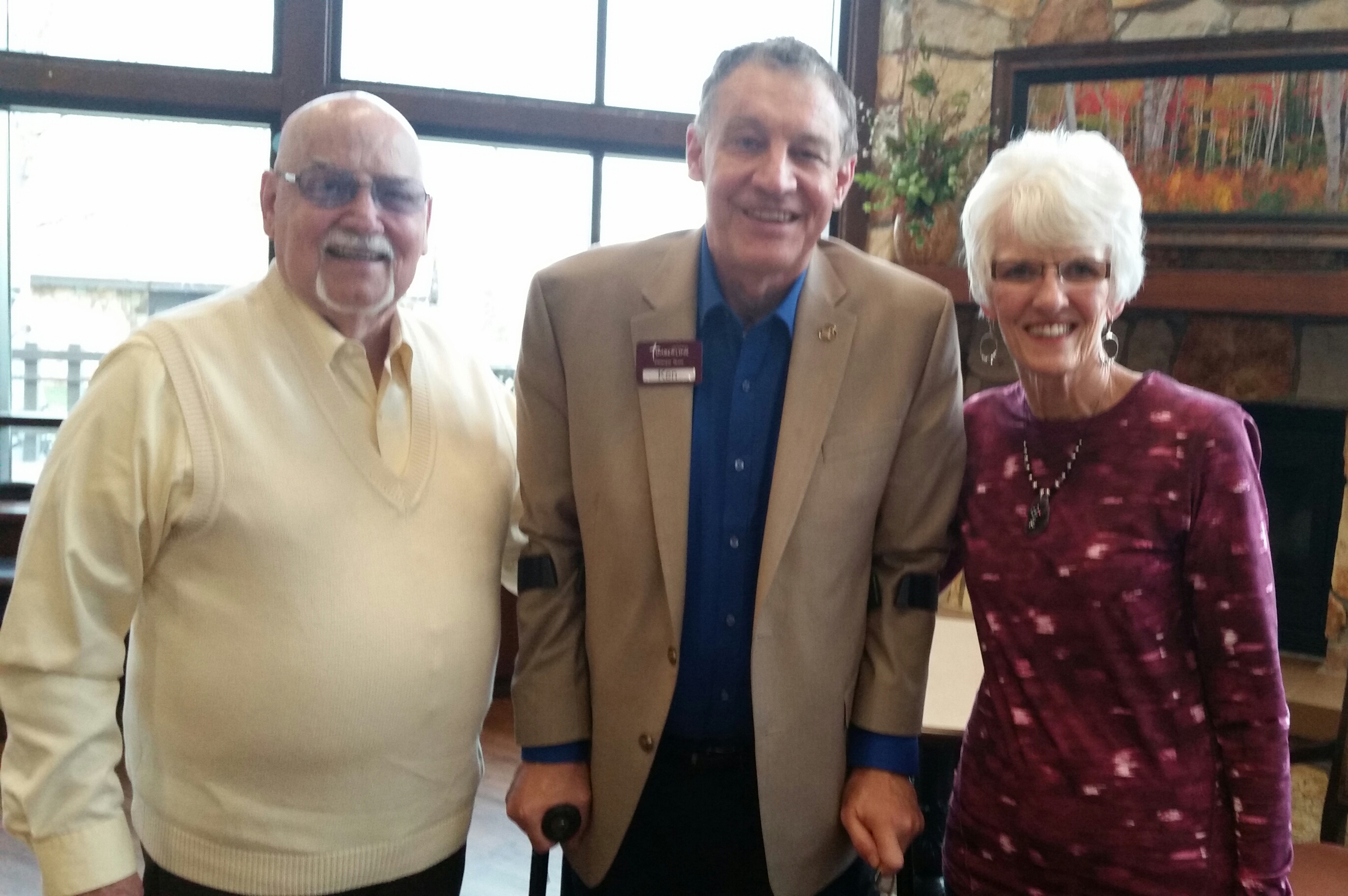
20160409_113722-1This morning it was a special treat to have Former Senator John Andrews as the guest speaker at Timberline Allies men’s ministry breakfast. John shared his testimony of faith and challenged men to be a “link” in the chain that leads others to Christ.  We then had the opportunity to meet with Dick Foth. I knew these two men would have much in common about their commitment to Christ and His work and the political arena. I was pleased to have the opportunity to present both of these men a copy of my book in gratitude for their leadership, support and kind endorsement.

BIBLE VERSE FOR TODAY… “You also know what Joab son of Zeruiah did to me and what he did to the two commanders of Israel’s army, Abner son of Ner and Amasa son of Jether. He murdered them in a time of peace to avenge blood shed in war. He spilled that blood on his own waistband and on the sandals of his feet. Act according to your wisdom, and do not let his gray head descend to Sheol in peace.” I Kings 2:5-6 HCSB

A leader may have power, but how and when that power is used is important. A leader understands that even if he is “king” with ultimate authority, it doesn’t mean he doesn’t need to be aware of other “power brokers” in his ranks.

This is observed in the Bible with the influence, popularity and acclaim, that was held by the general’s of Israel’s army. Joab was David’s nephew and was the leader of the military the entire time that David reigned as king. This placed Joab in a position of power an influence among the people.

As a result, when Joab acted wickedly, it placed David in a difficult position. Abner was King Saul’s military leader. When Saul’s son reigned for seven years during a time when Israel and Judah were divided, Joab killed Abner. David ordered all his men including Joab to mourn for Abner. However, David was  in a difficult position, Then the king said to his soldiers, “You must know that a great leader has fallen in Israel today. As for me, even though I am the anointed king, I have little power today. These men, the sons of Zeruiah, are too fierce for me. May the Lord repay the evildoer according to his evil!” (2 Samuel  3:38,39 HCSB)

Abner’s death arose when King Ish-bosheth accused Abner of sleeping with one of Saul’s concubines. We read of Abner’s status, During the war between the house of Saul and the house of David, Abner kept acquiring more power in the house of Saul.” (2 Samuel 3:6 HCSB)

As a result when Ish-bosheth accused Abner, he used that power to bring Ish-bosheth’s reign to an end. Abner said, “All this time I’ve been loyal to the house of your father Saul, to his brothers, and to his friends and haven’t handed you over to David, but now you accuse me of wrongdoing with this woman!  May God punish Abner and do so severely if I don’t do for David what the Lord swore to him:  to transfer the kingdom from the house of Saul and establish the throne of David over Israel and Judah from Dan to Beer-sheba.” 

We then read, “…Ish-bosheth could not answer Abner because he was afraid of him.” (2 Samuel 8-11 HCSB)

In the New Testament we find the Pharisees, which possessed much power, also realized that it was tenuous and they had to be sensitive to the people that followed them. One one occasion we read where Jesus asked the Scribes and Pharisees about the ministry of John the Baptist, was it from heaven or men? The Pharisee’s reasoned, “…If we say, ‘From heaven,’ he will ask, ‘Then why didn’t you believe him?’ But if we say, ‘Of human origin’ . . . ” (They feared the people, for everyone held that John really was a prophet.)” (Mark 11:31-32 NIV)

On another occasion they sought to arrest Jesus, and then had second doubts. “They looked for a way to arrest him, but they were afraid of the crowd because the people held that he was a prophet.” (Matthew 21:46 NIV)

It is interesting today, how politicians and political leaders pay attention to the opinions of people. Public opinion polls and surveys often influence public policy much more than it is realized. At times an effort is made to gain public support of a policy to get action.

Once again, wise leaders know how to act and when to act. David had to wait until his son Solomon became King before judgment came upon Joab for his evil deeds. This was facilitated when Joab joined in supporting Adonijah’s attempt to gain David’s throne.

Even in their plot against Jesus, the religious leaders knew they had to wait for the “right opportunity” and get the people on “their side.” Today you will find public policy driven by public opinion on a variety of issues.

For those who want to be a friend of a leader it is good to use your “power” to “speak truth to power.” A wise leader will listen and take to heart the advice and counsel that is offered. For the leader, remember that time is on your side. Patience is a virtue and wisdom in taking action will result in the success or failure of an endeavor.


Why God Does What He Does

20160408_150115This ended up being a good day. Nice summer weather. I got out on my bike for the first time this season. We said goodbye to our neighbors of the last three years Jeff and Jan Steiner. Jeff is returning to Washington D.C. to work for USDA in a research capacity. We enjoyed a “last supper” together before they head east early in the morning. When I returned home from our dinner, I found that the sample copies of my book arrived! I was pleased to give Jeff one of the review copies as a gift and send off to on their new venture.

BIBLE VERSE FOR TODAY…  All this happened so that they might keep His statutes and obey His instructions. Hallelujah!”  Psalms 105:45 HCSB

When we look at the Bible we see a God who proves Himself. A God who gives reasons why He is to be honored, trusted and obeyed. It is interesting to observe how quickly God’s people turned away to idols and false gods of their own choosing. God’s who do nothing, offer nothing and really are nothing, other than an extension of the hearts of sinful people, who want their own way.

As Psalm 105 opens, we are implored to,Give thanks to Yahweh, call on His name; proclaim His deeds among the peoples. Sing to Him, sing praise to Him; tell about all His wonderful works!” (Psalms 105:1,2) We see the charge to, “tell about the Lord’s deeds and His wonderful works.” When you stop and observe all the Lord had done, an awe inspiring response and desire to tell others come natural. What impresses us, is express by us.

The psalmist shows how the Lord is our “go to” source for all that we need,Honor His holy name; let the hearts of those who seek Yahweh rejoice. Search for the Lord and for His strength; seek His face always. (Psalm 105:3,4 HCSB) When God is on your side, it is a cause for comfort and rejoicing. It builds confidence for living. Whatever your need, turn to the Lord; find strength in Him. Be one who lives in His presence. When you find yourself in need, your default should be to “seek His face.”

What is the basis for this confidence in the Lord?

“Remember the wonderful works He has done, His wonders, and the judgments He has pronounced His judgments govern the whole earth. He remembers His covenant forever, the promise He ordained for a thousand generations.” (Psalm 105:5-8 HCSB)

The Lord God  Almighty, is not some “local god.” He is the God who governs the whole earth, that  He created. He is not obligated, but chooses to reveal Himself through His works and wonders and judgments. Not only that instead of waiting for “pledges of allegiance” He initiates a covenant with His people. He then shows how patiently, methodically and with divine power He fulfills that covenant and brings to pass all the He has promised! (Psalm 105:12-44)

That deserves an “Hallelujah!” The result of all this for God’s people? “…that they might keep His statutes and obey His instructions.” 

Our God is a God who initiates. We see it in the Old Testament covenant with Abraham. We see it in the New Testament with God sending His Son to our salvation. The pagan concept of a “god” is that people initiate, the deity is to respond. With the Lord God, we see Him initiate and we respond in surrender, trust and obedience. As we then seek His face and make Him our “go to” source of help; He provides strength, wisdom and meets all of our needs.

The Test of New Life

This afternoon I spent i20160407_193339n Denver at the Capitol. My scheduled meeting with a State Senator was delayed because of final action on the sate budget bill. This evening my sister Nathalee, who came in from Grand Junction, and I went to dinner with my mother in recognition of her 91st birthday. She is having more difficulty with memory, judgment, hearing and eye sight, but outside of that, is doing fairly well. 🙂 Perhaps typical for 91. (we attempted a “selfie” with mom after dinner)

BIBLE VERSE FOR TODAY… Your speech should always be gracious, seasoned with salt, so that you may know how you should answer each person.” Colossians 4:6 HCSB

Paul’s letter to the Colossians and the Ephesians have some similarities. To both he reminds and challenges them about the new life they have in Christ. Paul says we have an “old self that is to be viewed as dead and w are to “put on” a new self. One that is created by Christ, so we can live a “Christ-centered” life opposed to a life that lives by a fallen human nature.

Paul gives a detailed description of the characteristics of the new life. “…put on heartfelt compassion, kindness, humility, gentleness, and patience, accepting one another and forgiving one another if anyone has a complaint against another. Just as the Lord has forgiven you, so you must also forgive. Above all, put on love—the perfect bond of unity.  And let the peace of the Messiah…control your hearts…”  (Colossians 3:12-15 HCSB)

As Paul draws his letter to a close he urges what I call the most challenging test of the new life. That is because any issue of speech or the tongue is just that. It is challenging and it is a test. We see our speech is important because it reveals our heart.

Jesus put it simply, “For the mouth speaks what the heart is full of. (Luke 6:45 NIV) If there is unforgiveness, bitterness and resentment, it will be reflected in our speech. If we have genuine concern for people, it will be reflected in our speech. If we have respect for those with whom we disagree, it will be reflected in our speech.

I listened today to the speech of Senate President Bill Cademan, as he made closing remarks on the new state budget. I believed they were very gracious and straightforward. He recognized the difficulty of the process, the challenge and disappointment when state priorities are not reflected in final decisions, but in the end having a budget that is acceptable and the best for the citizens of Colorado.

Paul says our words are to be full of grace. The kindness of Christ, is to be reflected in our words. This doesn’t mean “pollyannish” but reasonable. I then notice Paul says, “season with salt” not “salty.” They are gain a hearing, not be offensive and create rejection. Finally he says, “…so that you may know how you should answer each person.” That requires wisdom. When we look at some of Jesus’ words for spiritual hypocrites, the may be view as more “salty” than seasoned with salt. Then again, He was the Son of God and knew the hearts of all men. Still we realize how we speak is not to be confused with what we speak. Truth is not be compromised. Principles are not to be laid aside.

Having lived in a “world of words” more than most people, I realize the importance of the words we speak. They say something about us, how we view others and who is directing our life. May what comes out of our mouth reflect the Christ that is within our hearts.